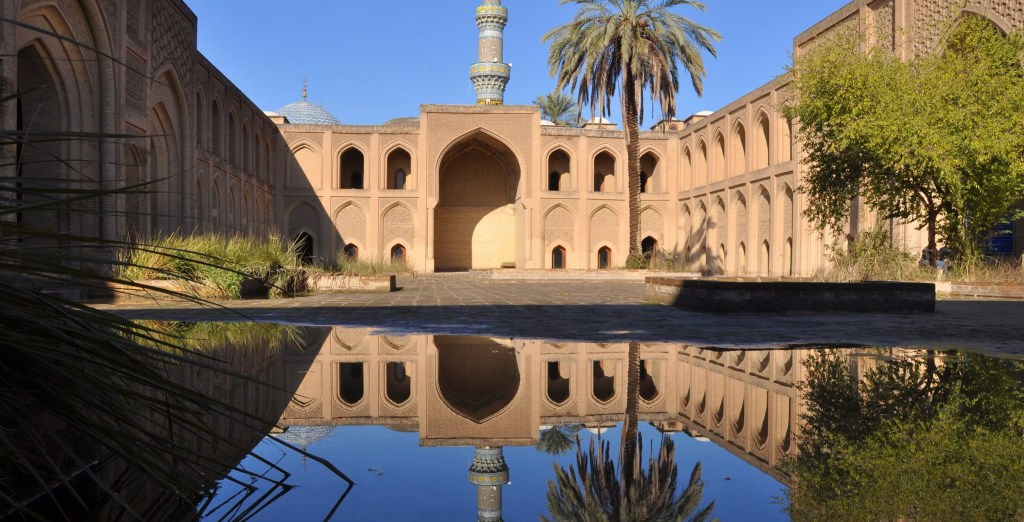
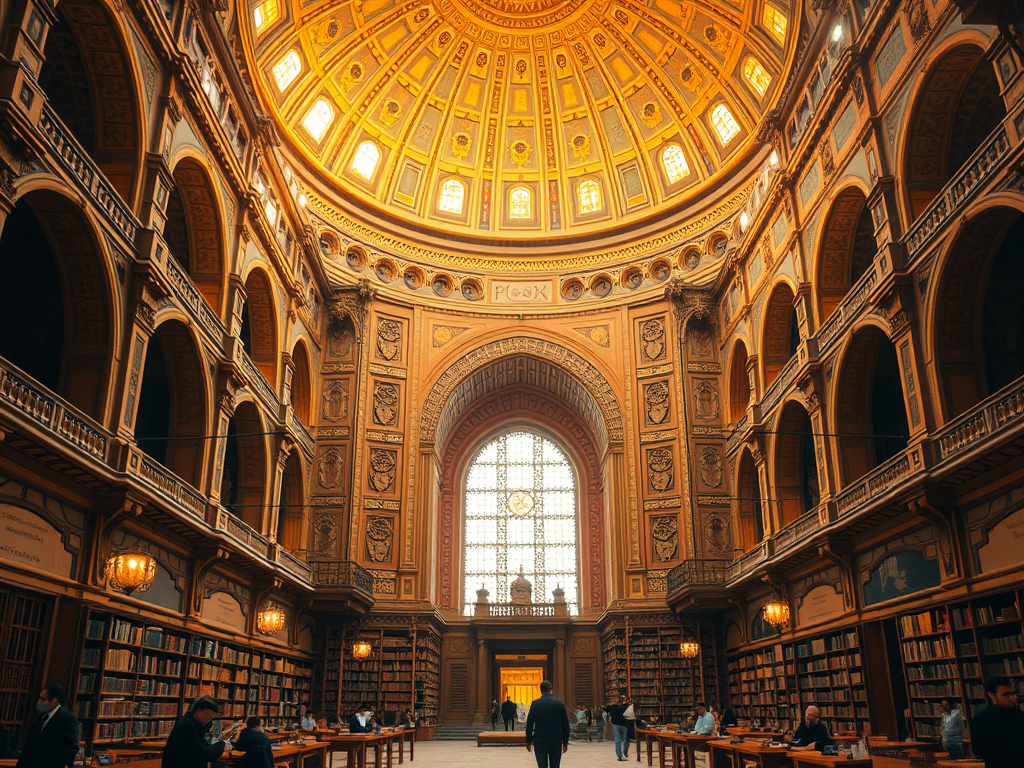
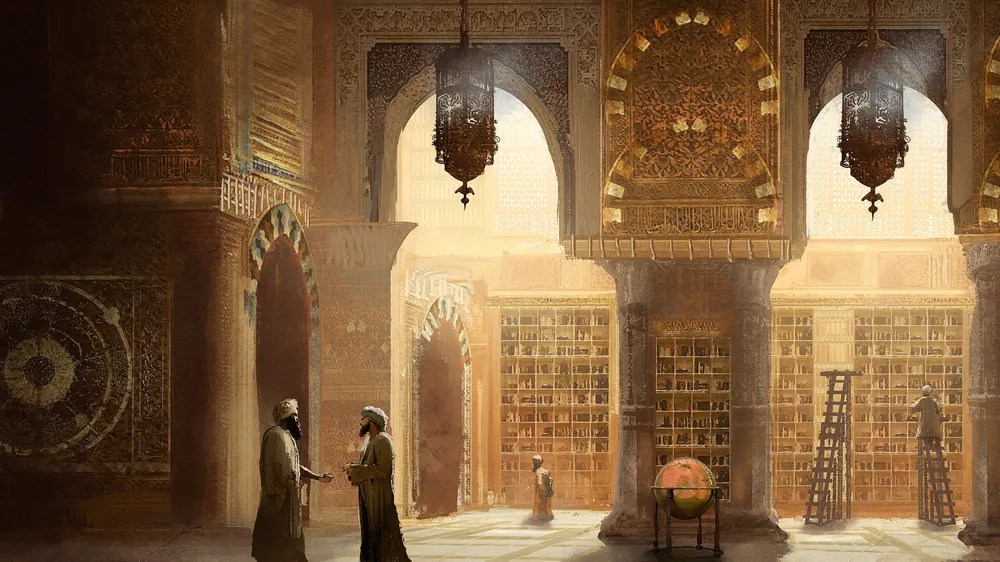
The Baghdad House Of Wisdom, also known as the Grand Library Of Baghdad was one of the most remarkable centers of knowledge in human history. It was an establishment with a vast collection of books ranging from Philosophy to Mathematics and even other disciplines like Medicine and Law. These matters were written down and collected from all four corners of the Islamic empire in Greek, Syriac, Persian, and Arabic. This made it a vast portal of knowledge open to all peoples that lived and passed through the area.
The library was assumed to be founded in the late 8th century in the Abbasid Era of the Islamic empire. At first, the archive was a private collection belonging to the second Caliph of the Abbasid Era Harun Al-Rashid. During the reign of the fifth Caliph Al-Ma’mun, the establishment was turned into a public library for the world to have access to. Al-Ma’mun believed that the people of his empire had the right to access this golden library filled with extraordinary wisdom. Thanks to these decisions, scholars were more open in publicly sharing the knowledge they collected through their lifetimes. This contribution further enriched the House of Wisdom with immense knowledge.
Scholars like Al-Khawarizmi, who was the founding father to algebra and the creator of algorithms, Al-Battani, an astronomer, who understood the nature of annual solar eclipses, the Banu Musa brothers, astronomers who accurately calculated the circumference of the earth using geodesic measurements, all contributed to the richness of this ancient library. These contributions are why this no longer existing archive still has an impact on our modern and is still remembered today.
One of the most important contributions that the Baghdad house of Wisdom had to offer was its translation movement. Translators took texts in Greek, Chinese, Syriac, Persian, Sanskrit and Indian languages and translated them into Arabic. This gave the Islamic Empire a huge advantage in the world of knowledge. Thanks to these translated texts, Islamic scholars had access to knowledge that could never have been obtained due to the language barrier that was imposed at that time.
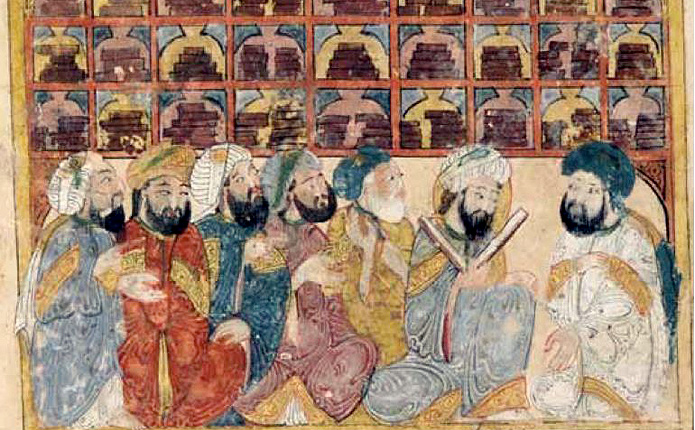
During Al-Ma’mun reign, knowledge was incredibly precious. There are many stories in which the Caliph ordered that books were to be taken in superiority than gold and other gems when a city was captured. Al-Ma’mun’s drive for knowledge was created in a dream he had. It is said that in that dream, the Caliph had a conversation with the Greek philosopher Aristotle about what was good. Inspired by this conversation, Al-Ma’mun created gatherings in the house of wisdom where scholars were invited to share their thoughts about many various subjects.
In 1258, the Mongol army entered the city of Baghdad. The next week was filled with destruction and pillage. Sadly, the House of Wisdom was destroyed and burned at the hands of the Mongols. The books that sat on the shelves of the library were thrown onto the Tigris river. According to a 16th century story about the siege written by Quṭb al-Dīn al-Nahrawālī “So many books were thrown into the Euphrates River that they formed a bridge that would support a man on horseback.” It is said that the river grew black, tinted by the ink from the books that had been thrown in. Stories also suggest that the Mongol soldiers ripped the books apart and used the leather covers to make sandals.
 Young Writers Club
Leave a comment